



Paring woodworking chisels
Description
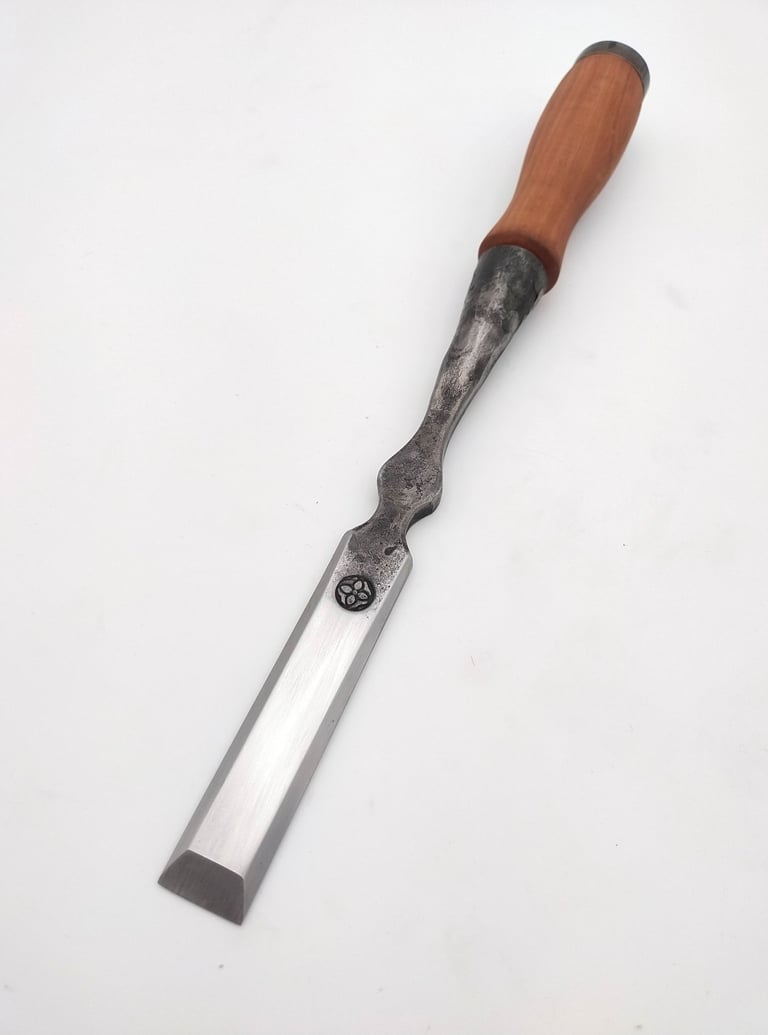
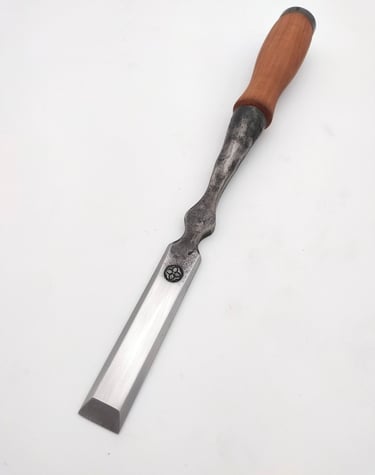
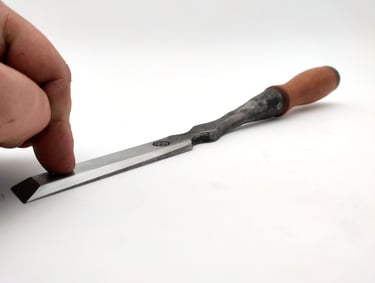
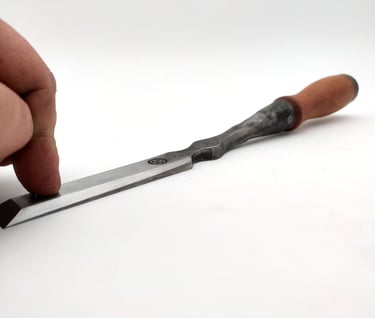
Similar to a timber framing slick but shorter, this is a long wood chisel featuring an offset between the blade and the handle, allowing it to be used in the middle of a wide board or within a long joint. Its excellent balance and handling make it efficient and precise for most joinery tasks, particularly for paring and fitting joints. Note that the socket is longer than on standard socket chisels because the offset angle must not be too sharp; otherwise, the transfer of force from the striking area to the cutting edge would be compromised.
general informations
- Length: approx. 320 mm
- Blade length: approx. 100 mm
- Handle length: 115 mm
- Blade thickness: approx. 4 to 6 mm
- Weight: 150g to 320g (depending on blade width)
- Steel: heat treated C70
- Finish: Brushed, treated with camellia oil
- Cutting edge: 25 degrees (standard)
- Handle wood: Beech/Ash/Elm/Service tree
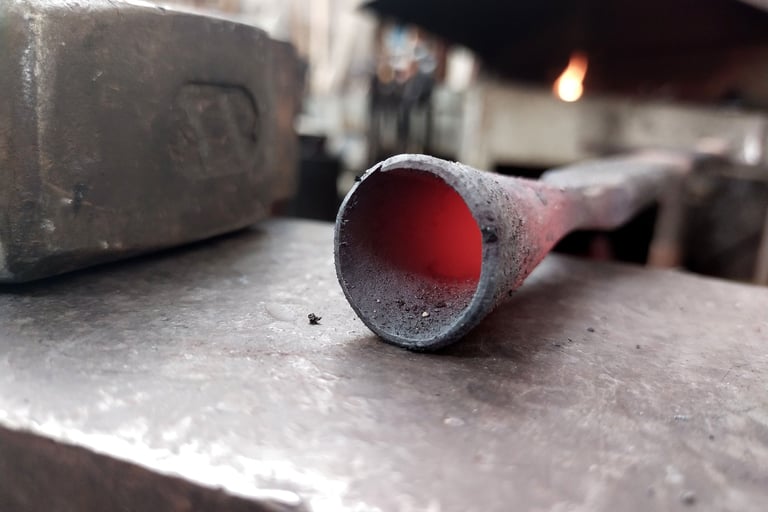
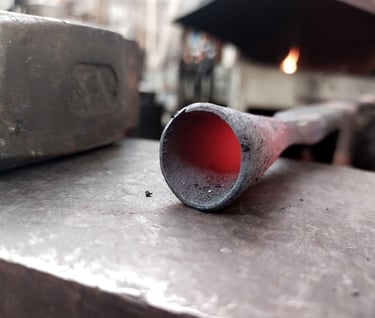
- Handle attachment: Socket
- Offset blade
- Striking ferrule
- Side bevels for dovetails available upon request
Prices : from 75 to 120 euros
Indicative prices, subject to change, Excluding shipping costs, Available to order
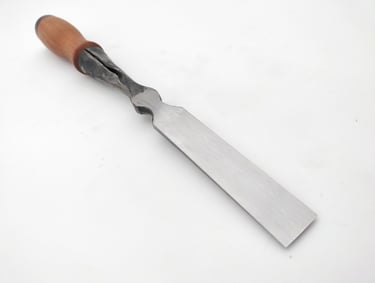
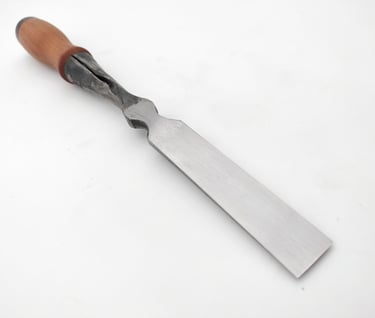
What is a socket chisel?
These chisels are assembled by force-fitting a forged ferrule into a wooden handle. This attachment method, combined with riveting and gluing, ensures the handle's exceptional durability.
This process prevents the handle from becoming loose or splitting during heavy-duty work or fluctuations in temperature and humidity.
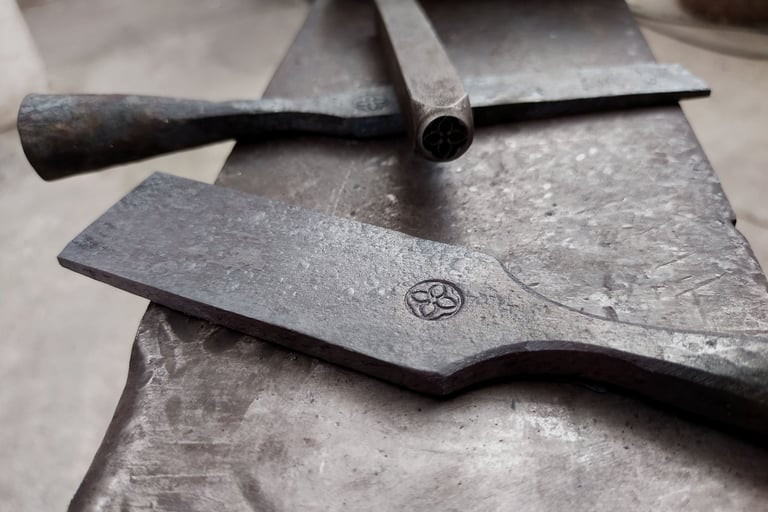
I forge my chisels from C70 carbon steel, which achieves a hardness of 60–62 HRC after heat treatment.
It is an easy-to-sharpen, impact-resistant, and durable steel. Its downside is its susceptibility to oxidation, so it requires care.
The Steel
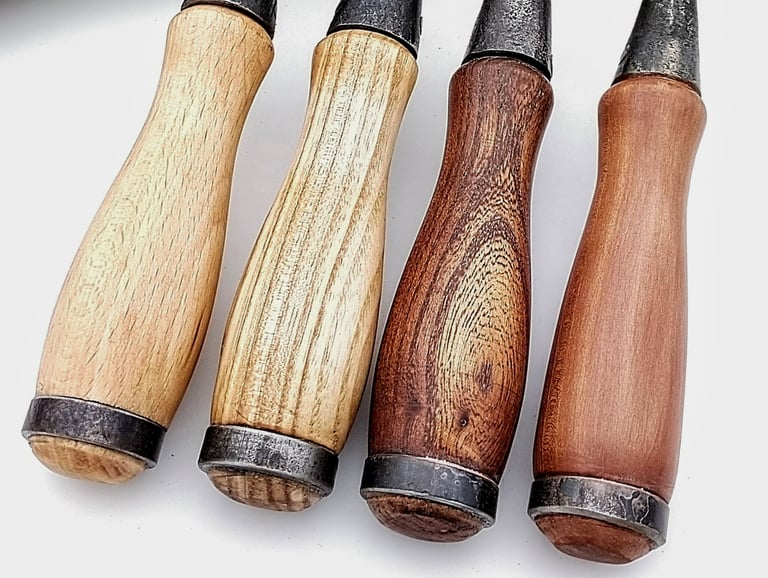
For any tool, it is essential to choose a wood species suited to the task. Woods that are too porous or too brittle should be avoided. I use three different types of wood: beech, ash, and service tree. All of these are suitable for tools used with controlled striking, such as chisels, though they differ in quality and durability.
the Wood handle
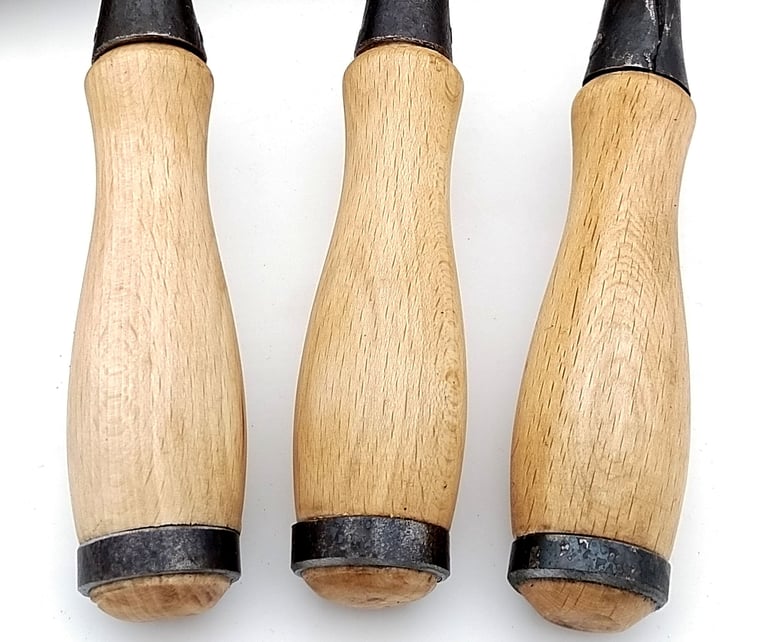
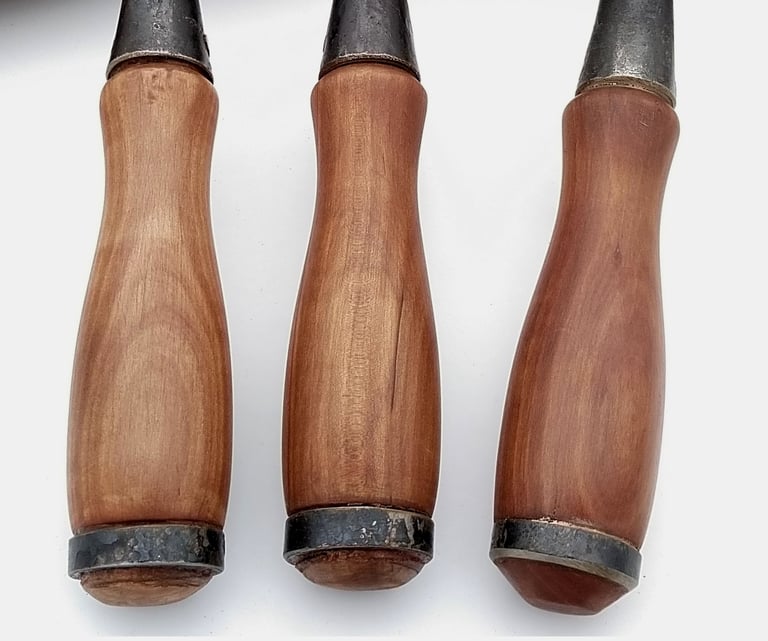
Beechwood offers a good grip for the chisel and is both hard and resilient enough to withstand repeated mallet blows.
Beechwood handle
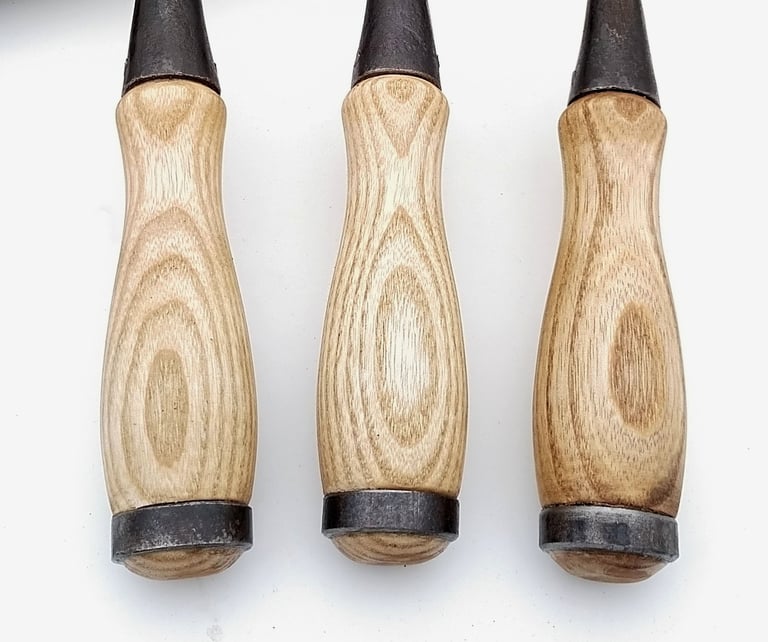
Ash handle
Less prone to showing dirt than beech, ash strikes an excellent balance between flexibility, hardness, durability, and price. It reveals beautiful grain patterns when treated with Tung oil and is a wood very frequently used for handles today.
Cormier handle
Service tree wood is one of the hardest woods in Europe. Highly resistant to rot, it was used for gear components in flour mills due to its exceptional strength. Today, it is a rare wood that combines aesthetic appeal, strength, and extreme durability. The mallet will never damage the handle, given the wood's hardness and resilience. It is also heavier, shifting the balance point closer to the hand, which makes it easier to handle. Its density makes it very pleasant to hold, as the surface is exceptionally smooth. Its nearly uniform reddish hue—ranging from lighter to darker shades—gives it a very elegant appearance.
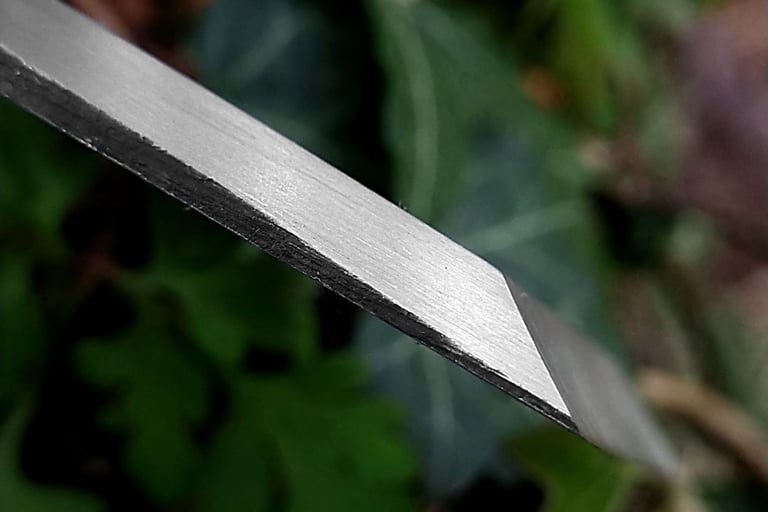
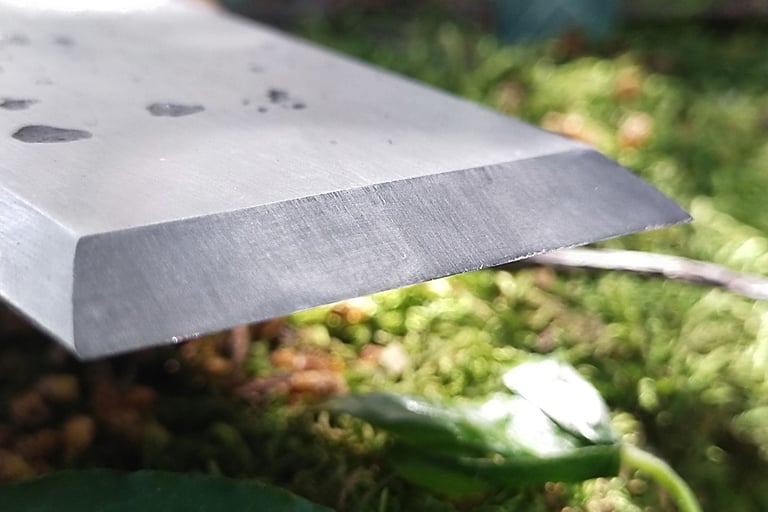
Its lateral bevels are 60 degrees, making it perfectly suited for the sharpest joints.
I usually use a sharpening angle of 25 degrees, resulting in a razor-sharp edge, though this can be adjusted to your preference.
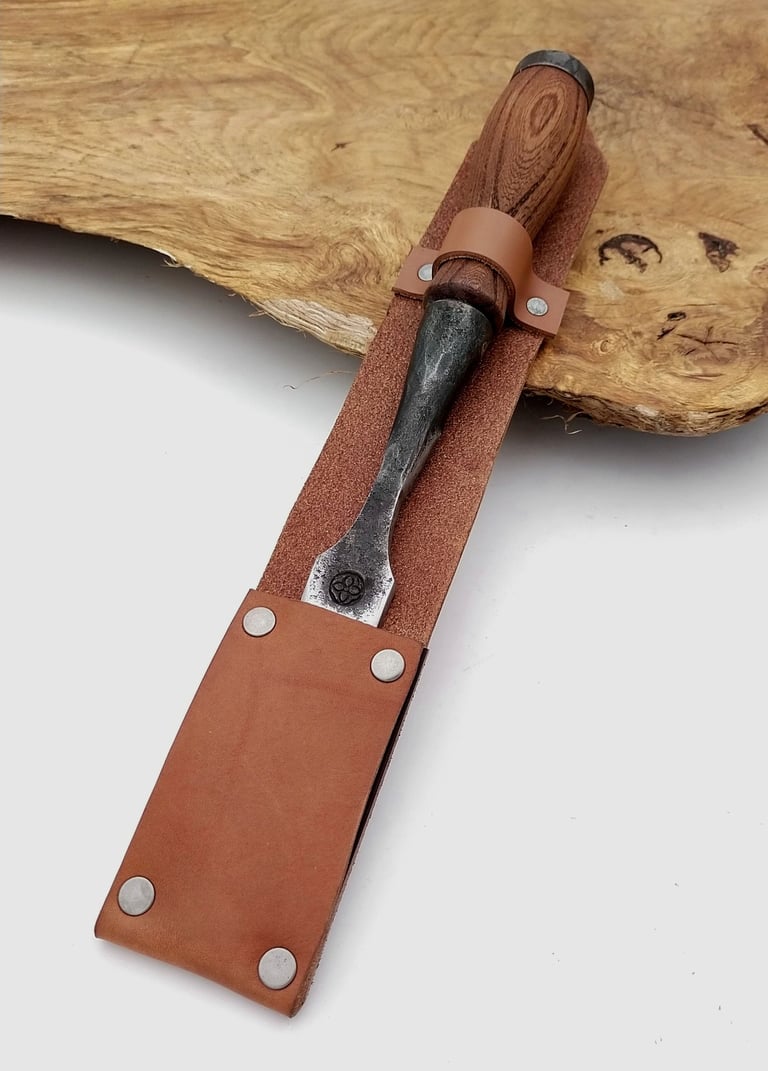
Leather sheath for unique chisel : 17,5 euros
I also offer leather cases for one or more chisels.
Leather case for multiple pairs of chisels: €50 to €95 upon request (custom-made).
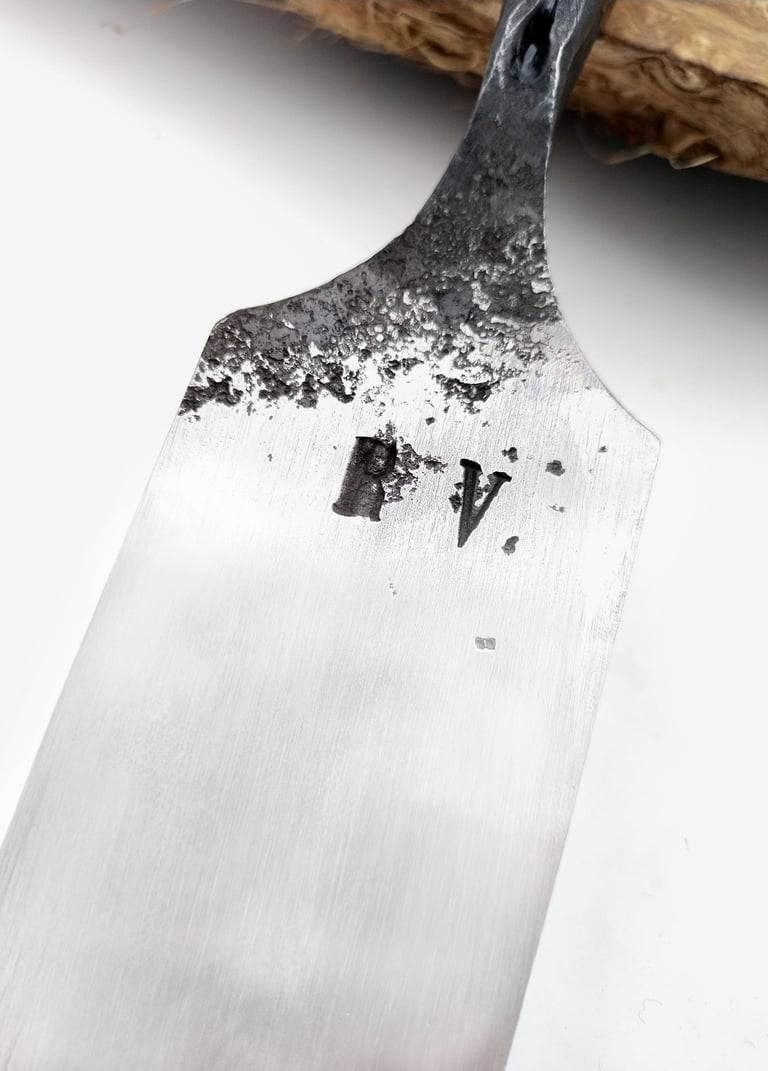
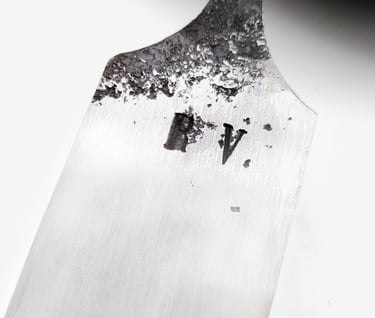
Your initials on the tool: + €5 (upon request, for widths of 10mm and up)
Remember that all the tools I make can be customized, within reason.
to order, please, contact me
Mentions légales et conditions générales de vente
site réalisé par Digipixals